
Thailand has built one of the strongest reputations in the world for rhinoplasty. Surgeons in Bangkok perform high volumes of nose surgery year-round — on local patients, on visitors from across Asia, and on medical tourists from Australia, the Middle East, Europe, and North America who have done their research and made the trip deliberately.
The appeal is straightforward: rhinoplasty in Thailand costs $2,500 to $8,500 with board-certified plastic surgeons at JCI-accredited hospitals — half to a third of what the same procedure costs in the US, UK, or Australia. But price alone doesn’t explain why Thailand has become a serious destination for this procedure specifically. The high surgical volume, the range of techniques on offer, and the standard of post-operative care all contribute.
This guide covers what rhinoplasty in Thailand actually costs in 2026, broken down by procedure type, what the techniques involve, what recovery looks like, and what to look for when choosing a surgeon.
What does rhinoplasty cost in Thailand in 2026?

Rhinoplasty in Thailand typically costs from $2,000 to $3,300 for standard procedures, with the final price depending on the surgical technique, the surgeon’s expertise, and the chosen city. More complex cases and premium surgeons push that higher.
Here is a breakdown by procedure type:
Open rhinoplasty — the most common approach for complex reshaping. Open rhinoplasty in Thailand costs $2,900 to $4,000, using external incisions for greater surgical access.
Closed rhinoplasty — all incisions inside the nostrils, no external scarring. Closed rhinoplasty in Thailand typically costs $1,100 to $2,300, with savings of around 89% compared to the US average.
Tip rhinoplasty — reshaping the nasal tip only, without altering the bridge or bone structure. Tip rhinoplasty in Thailand costs $1,100 to $1,800, with patients saving around 91% compared to the US average of $16,000.
Revision rhinoplasty — correcting the results of a previous procedure. More complex and priced accordingly. Revision rhinoplasty in Thailand ranges from $2,600 to $4,900, with prices depending on the complexity of the repair, the need for cartilage grafts, and the facility tier.
Ethnic rhinoplasty — procedures tailored to specific anatomical characteristics and aesthetic preferences. Ethnic rhinoplasty in Thailand generally ranges from $2,500 to $5,500 for an all-inclusive package, representing savings of 60 to 80% compared to similar procedures in the US or Europe.
Most packages at reputable Bangkok clinics include the surgeon’s fee, anaesthesia, operating theatre, one night in hospital, post-operative medications, and follow-up appointments. Some include 3D imaging consultations and airport transfers.
Open vs closed rhinoplasty: which one is right for you?
This is the most common question people have going into a rhinoplasty consultation, and the honest answer is that it depends entirely on your anatomy and your goals — not on a preference for one technique over the other.
Closed rhinoplasty places all incisions inside the nostrils. There is no external scar. It is faster, results in less initial swelling, and suits patients whose goals involve minor refinements — smoothing a bridge bump, narrowing the tip slightly, or making subtle adjustments to the nasal profile. Patients report that closed rhinoplasty in Bangkok feels indistinguishable from open results after six months, and many highlight the rapid seven to ten day recovery compared to longer timelines elsewhere.
Open rhinoplasty involves a small incision across the columella — the strip of tissue between the nostrils — which allows the surgeon to lift the nasal skin and see the internal framework directly. Open rhinoplasty has a longer recovery time, with bruising and swelling taking four to six weeks to fully resolve, and surgery itself takes two to three hours compared to around one and a half to two hours for the closed method. It is the standard approach for complex structural cases — a crooked nose, a short nose, significant tip work, or revision surgery where the underlying architecture needs careful reconstruction.
A good surgeon will tell you which technique suits your case. Be cautious of any clinic that defaults every patient to one method regardless of anatomy.
What the procedure involves
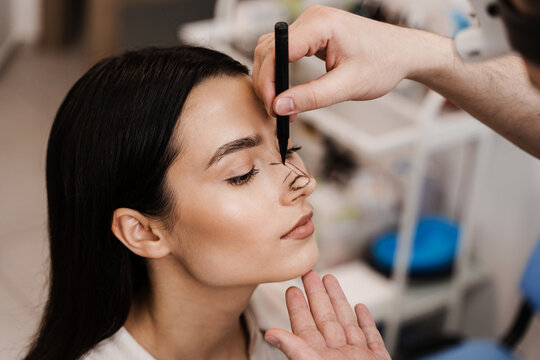
Rhinoplasty in Thailand is performed under general anaesthesia at an accredited facility. Most patients spend one night in hospital after surgery. A splint is placed on the nose to provide support, and the main follow-up appointment occurs five to seven days later, when the surgeon removes the splint and any stitches and assesses initial healing before clearing the patient for their flight home.
Bangkok surgeons work with a range of materials depending on the procedure — cartilage grafts from the ear or rib for structural work, Gore-Tex or silicone implants for bridge augmentation in patients seeking more definition. Your surgeon will recommend the appropriate material based on your anatomy and goals.
3D imaging is increasingly standard at Bangkok’s better clinics, allowing you to see a projected outcome before committing to a surgical plan. This is particularly useful for patients coming from abroad who need to align expectations with their surgeon during a condensed consultation window.
Recovery: what to plan for
Most rhinoplasty patients in Bangkok have their cast removed on day seven, attend a final follow-up around day nine or ten, and fly home a few days after that. Planning for ten to fourteen days in-country covers the procedure, cast removal, and a final review.
The first 72 hours involve the most significant swelling and congestion — manageable but not comfortable. Most patients are moving around normally within a few days, though the nose remains sensitive and swollen for longer.
Initial recovery takes about two weeks, after which most daily activities can resume. Strenuous exercise should be avoided for four to six weeks, and final results are fully visible after twelve months as residual swelling in the tip gradually resolves.
A few practical notes for recovery in Bangkok:
- Sleep with your head elevated for the first two weeks
- Avoid sun exposure directly on the nose for at least six weeks
- No glasses resting on the nasal bridge for six to eight weeks post-surgery
- No blowing your nose for the first week
- Avoid alcohol and smoking in the weeks before and after surgery — both impair healing and increase bruising
How to choose the right surgeon
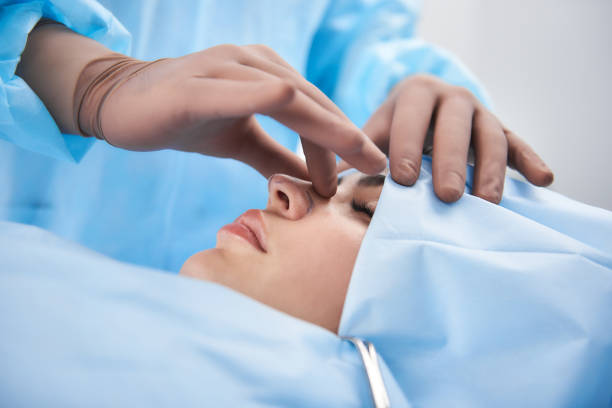
Rhinoplasty is among the more technically demanding cosmetic procedures. The margin between a result you’re satisfied with and one that requires revision sits largely in the surgeon’s hands. A few things worth verifying before you book:
Board certification. Your surgeon should hold certification from the Royal College of Surgeons of Thailand (RCST) and ideally membership with ISAPS (International Society of Aesthetic Plastic Surgery) or ThPRS (Thai Plastic and Reconstructive Surgery).
Documented volume and a relevant portfolio. Ask specifically how many rhinoplasties your surgeon performs annually and request before-and-after photos of patients with similar anatomy and goals to yours. A surgeon who primarily operates on Asian patients may not be the best fit for a patient seeking a result suited to a different facial structure, and vice versa.
Realistic 3D planning. A surgeon who takes time to understand your aesthetic goals and shows you a projected result before surgery is a better sign than one who takes a quick consultation and moves straight to scheduling.
Revision policy. Understand what happens if you’re unsatisfied or experience a complication. Reputable surgeons and facilities are clear about this upfront.
Knowing what to look for is one thing — knowing which surgeons in Bangkok actually meet that standard is another. That’s where having someone on the ground helps.
How Zenify BKK can help
Navigating Bangkok’s cosmetic surgery landscape from abroad takes time and local knowledge that most patients simply don’t have. The range of surgeons and facilities is wide, the quality varies significantly, and choosing well from the outside is harder than it looks.
Zenify BKK connects patients coming to Bangkok for rhinoplasty with surgeons and clinics that match their goals, anatomy, and budget — and provides support throughout the process, from initial consultation to post-operative follow-up. We handle the coordination so you can focus on your result.
If you’re considering rhinoplasty in Thailand and want guidance from people who know the landscape, request a quote or get in touch and we’ll take it from there.
Frequently asked questions
Is rhinoplasty in Thailand safe? Yes — at the right facility with a qualified, board-certified surgeon. The biggest study on rhinoplasty complications looked at nearly 5,000 patients and found serious problems in just 0.7% of cases within the first 30 days. When patients score their own results, satisfaction lands in the 80 to 95% range. The key variables are surgeon credentials and case planning, not geography.
How long do I need to stay in Thailand for rhinoplasty? Plan for ten to fourteen days minimum. That covers pre-operative tests, surgery, cast removal at day seven, a final follow-up, and a few days of bruising resolution before you fly home.
What is the difference between open and closed rhinoplasty? Closed rhinoplasty uses incisions inside the nostrils — no external scar, faster recovery, suited to minor refinements. Open rhinoplasty involves a small external incision that allows the surgeon direct access to the nasal structure — better suited to complex reshaping, revisions, or significant tip work. Your surgeon should recommend the appropriate technique based on your anatomy, not default to one approach for every patient.
Can I combine rhinoplasty with other procedures? Yes. Many patients combine rhinoplasty with chin augmentation, eyelid surgery, or other facial procedures during the same trip. Zenify BKK can help coordinate a combined programme if that’s what you’re considering.
Will there be visible scarring? Closed rhinoplasty leaves no external scar. Open rhinoplasty leaves a small scar across the columella that, in most patients, fades to near-invisibility within twelve months.
What if I need a revision after I return home? Ask your clinic and surgeon about their revision policy before surgery — specifically what they cover, for how long, and under what circumstances. Having a local contact in Bangkok who can communicate with your surgical team on your behalf if something comes up after you’ve returned home is worth arranging in advance.
Zenify BKK is a premium health advisory and medical concierge service based in Bangkok, supporting expats, international patients, and medical tourists navigating Thailand’s healthcare and cosmetic surgery landscape.
