
There are seven medical tourism myths Thailand patients encounter repeatedly — and most of them are worth addressing directly. Medical tourism in Thailand attracts millions of patients every year. It also attracts a remarkable amount of misinformation. Some of it comes from people who had a bad experience, some from people who never came at all, and some from operators whose business models benefit from patients not asking too many questions.
The myths below are the ones we hear most often. From clients arriving in Bangkok for the first time, from people researching procedures abroad, and from expats who have been navigating the Thai healthcare system for years and still carry assumptions that don’t hold up.
Getting these wrong can affect your outcome, your budget, and in some cases your safety. So here is what the reality actually looks like.
Myth 1: A medical concierge just books your appointments
This is probably the most common misconception about what a medical concierge does, and the most damaging. It leads patients to underestimate what they’re missing when they navigate the system alone.
Booking appointments is the smallest part of the job.
A medical concierge worth using starts long before any appointment is made. They review your case: your medical history, your goals, your existing conditions, your medications, and what you’re actually trying to achieve. From there, they identify which surgeon or specialist is genuinely appropriate for your situation, not which one is available or which one is part of a standard package.
They verify credentials. They look at documented outcomes. They ask the questions that don’t appear on a booking form and that most patients wouldn’t know to ask.
Then, when the appointment happens, they show up. This is where Zenify BKK operates differently from most coordination services in this market. We accompany clients to their consultations. We are in the room. We ask questions, we clarify what the doctor has said, and we help the patient process what they’ve heard afterwards. A patient sitting alone in a specialist consultation in a second language, in a system they’ve never navigated, while managing anxiety about a health decision, is dealing with a lot at once. Having an experienced person in the room changes what the patient takes away from that appointment.

After the appointment, a medical concierge reviews the proposed plan, helps the patient understand their options, and stays available throughout the process, not just for one visit.
Booking the appointment is the easy part. Everything around it is the job.
Myth 2: Thailand is only cheap because corners are being cut
This one has been around for as long as medical tourism has existed, and it refuses to die despite being plainly wrong.
Thailand’s private hospital care costs 50 to 70 percent less than equivalent care in the US, UK, or Australia. The reason is not lower standards. The reason is economics.
Labour costs in Thailand are lower. Operating costs are lower. The infrastructure of private healthcare in Bangkok has been built specifically to serve a high volume of international patients, which creates efficiencies that Western healthcare systems, built around insurance billing, litigation risk, and administrative overhead, simply cannot match.
Thailand has more than 60 JCI-accredited hospitals. Joint Commission International accreditation is the globally recognized standard for hospital quality and patient safety, the same standard used to evaluate hospitals in the US and Europe. Several of Bangkok’s private hospitals have held this accreditation continuously for over two decades.
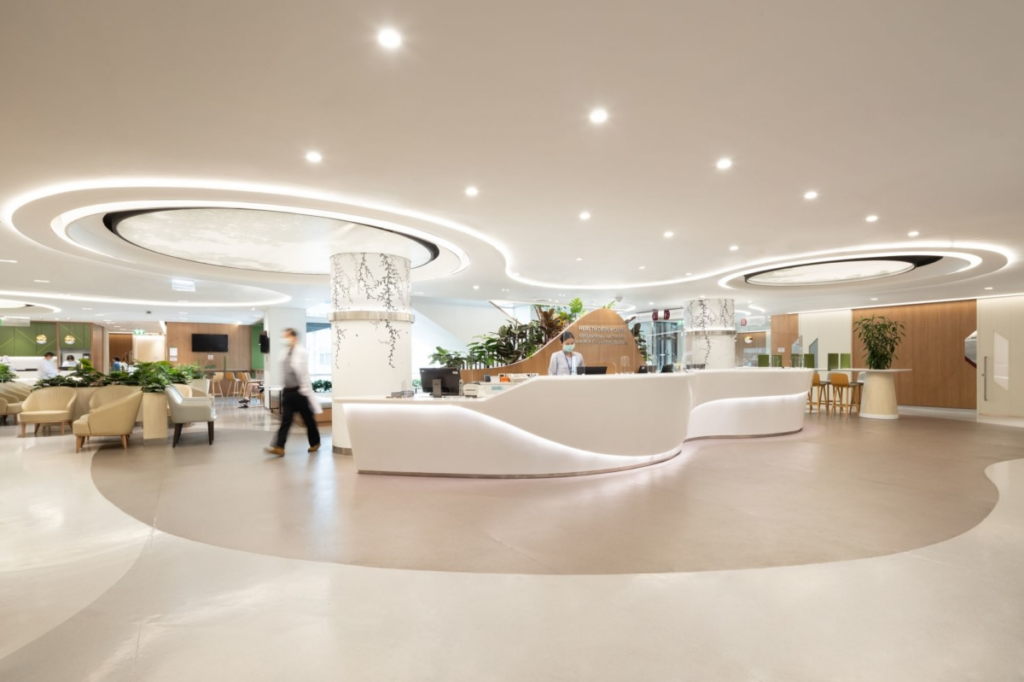
The surgeons performing procedures at these facilities trained internationally, in the US, UK, Europe, and Japan. Many have fellowship credentials from institutions that Western patients would recognize immediately.
The price difference reflects a cost structure, not a quality gap. Patients who choose the right facility with the right surgeon in Bangkok get outcomes that are clinically equivalent to what they would receive at home, at a fraction of the cost.
Where corners do get cut is in the high-volume package model. Operators who keep costs low not because of structural economics but because they are prioritizing margin over patient care. That is a business model problem, not a Thailand problem.
Myth 3: All Bangkok hospitals are basically the same
They are not, and assuming they are is one of the most consequential mistakes a medical tourist can make.
Bangkok’s private hospital market spans a wide range. At one end, there are internationally accredited flagship hospitals with Class-100 clean rooms, on-site anaesthesiology teams, dedicated international patient infrastructure, and specialists who have trained at some of the world’s leading institutions. At the other end, there are registered clinics with attractive branding and strong social media presences that do not operate to the same standard.
The differences that matter most are not visible in a reception area or a website. They show up in infection control protocols, in the quality of post-operative monitoring, in what happens when a complication arises at 2am, and in whether the surgeon performing your procedure is the one whose portfolio you reviewed, or someone else entirely.
JCI accreditation is a meaningful indicator, but it is a floor, not a ceiling. Within the accredited tier, there are still meaningful differences in specialist depth, surgical volume, and the specific capabilities relevant to your procedure.
Beyond accreditation, understanding which hospitals have genuine depth in the specialty relevant to your procedure, rather than relying on general reputation, is the kind of knowledge that takes time and on-the-ground experience to develop. It is also the kind of knowledge that makes the difference between a well-placed referral and an expensive mistake.
Myth 4: I don’t need a medical concierge if I have good health insurance
Insurance and medical concierge services do completely different things.
Your health insurance covers the financial cost of care. It does not help you identify which hospital is right for your condition. It does not tell you whether the treatment plan you’ve been offered is the most appropriate one available in Bangkok. It does not accompany you to your consultation, review your proposed procedure, or advocate for your interests when something needs escalating.
Insurance is financial protection. A medical concierge is navigational support. The two are not interchangeable, and having one does not substitute for the other.
In fact, some of the situations where a medical concierge adds the most value arise specifically in the context of insurance. Understanding your policy before you need to claim against it, knowing which hospitals have direct billing arrangements with your insurer, and knowing how to handle a billing dispute when the hospital’s international department and your insurer disagree about coverage.
Patients with excellent insurance still navigate the system. They still choose hospitals. They still receive treatment plans and make decisions about whether to follow them. Having someone experienced in the Thai healthcare system helping them make those decisions well is valuable regardless of what their policy covers.
Myth 5: Reading reviews and checking Instagram is enough to vet a surgeon
For choosing a restaurant, this approach is fine. For choosing the person who is going to perform surgery on your face or body, it is not.
Instagram shows you what a surgeon wants you to see. Before-and-after posts are curated. The best results get posted; the complications do not. Follower counts reflect marketing budgets and social media strategy, not surgical skill or complication rates.
Reviews on booking platforms tell you whether the patient felt well looked after and whether the communication was friendly. They rarely tell you whether the surgical technique was appropriate for the patient’s anatomy, whether the facility met the standard required for the procedure, or whether a result that looked good at six weeks held up at twelve months.

Vetting a surgeon properly means verifying their credentials against independent medical registries: the Royal College of Surgeons of Thailand, ISAPS, ThPRS, not just taking the clinic’s word for it. It means reviewing a portfolio of documented outcomes from patients with similar anatomy and goals to yours. It means understanding the surgeon’s specific volume in the procedure you’re considering, because a surgeon who performs 200 rhinoplasties a year has a meaningfully different skill set from one who performs 20.
It means knowing enough about the technique being proposed to evaluate whether what you’re seeing in the before-and-after photos is actually the result of good surgery, or good photography and good lighting.
Most patients don’t have this knowledge. That is not a criticism. There is no reason they should. It is simply the reality of what proper due diligence in this context requires.
Myth 6: Medical tourism is only for people who can’t afford surgery at home
This has not been true for a long time, and the patient profile in Bangkok’s leading hospitals tells a different story.
The international patients coming to Thailand’s top-tier facilities include executives, professionals, and individuals who could comfortably afford the same procedure in their home country. They come to Bangkok because the price differential at equivalent quality is too large to ignore, and because the experience, the service standard, and the access to certain advanced techniques make the trip worthwhile on its own terms.
There is also the wait time factor. A procedure that requires a six-month wait through a public system or a two-month wait at a busy private clinic back home can be scheduled in Bangkok within days or weeks. For patients dealing with something that affects their quality of life, or who simply don’t want to put their plans on hold for half a year, that kind of access is worth the trip on its own.
A deep plane facelift that costs $34,000 in New York costs $8,000 to $12,000 in Bangkok. A comprehensive health screening that costs $5,000 in London costs under $1,000 in Bangkok. VASER liposuction, stem cell therapy, advanced biomarker panels: procedures and diagnostics that carry serious price tags in Western markets are accessible in Bangkok at a fraction of those costs, at facilities that meet the same international quality standards.
Medical tourism is increasingly a choice made by informed, financially capable patients who have done the comparison and arrived at a rational conclusion. The assumption that it is a budget option for people who have no other choice is outdated and does not reflect who is actually in Bangkok’s private hospitals.
Myth 7: A cheaper package means the same surgery for better value
This is the myth that the recent 60 Minutes Australia report made impossible to ignore, and it is worth being direct about it.
A cheaper package does not mean the same surgery. It means the cost has been reduced somewhere. The question is where.
In high-volume medical tourism packages, costs are reduced through surgical scheduling: more procedures per operating list, less time per patient, surgeons contracted by volume rather than by outcome. They are reduced through post-operative care arrangements, moving patients from hospitals to recovery residences that cost less to operate and provide less clinical infrastructure. They are reduced through surgeon selection, contracting surgeons who accept lower fees because they have fewer alternatives, rather than those whose track record commands a market rate.
None of this is visible in the marketing. The photos look the same. The language about “world-class surgeons” and “accredited facilities” reads the same. The price is lower.
Surgery is not a consumer product where the cheapest option that meets a minimum specification is a rational purchase. The surgeon performing your procedure is not interchangeable with a cheaper surgeon at a lower price point. The facility where you recover matters. The post-operative monitoring matters. What happens if something goes wrong matters.

The right question before booking any cosmetic procedure in Thailand is not “how do I find the lowest price?” It is “how do I find the right surgeon, at the right facility, with the right support, and what is the fair price for that?”
Those are different questions, and they lead to very different outcomes.
How Zenify BKK approaches medical tourism in Bangkok
Zenify BKK is a health advisory and medical concierge service based in Bangkok. We work with expats, international patients, and medical tourists coming to Thailand for cosmetic surgery, healthcare, and longevity programmes.
We show up to consultations. We verify credentials. We review treatment plans. We coordinate across multiple providers when procedures are combined. We stay available after the patient flies home. And we work for the patients we support.
If you’re planning a procedure in Thailand and want to make sure the decisions you’re making are the right ones, get in touch or request a quote and we’ll take it from there.
Frequently asked questions
What does a medical concierge actually do in Bangkok? A medical concierge helps patients navigate Thailand’s healthcare and cosmetic surgery system, from identifying the right surgeon and facility to attending consultations, reviewing treatment plans, coordinating post-operative care, and staying available after the patient returns home. The scope goes well beyond booking appointments.
Is medical tourism in Thailand safe? At properly accredited facilities with qualified, credentialed surgeons, yes. Thailand has over 60 JCI-accredited hospitals and a large pool of internationally trained specialists. The risk in medical tourism comes not from Thailand specifically but from choosing operators or facilities without doing proper due diligence, something that applies equally to any country.
How do I know if a Bangkok surgeon is qualified? Verify their credentials independently against the Royal College of Surgeons of Thailand, the Society of Plastic and Reconstructive Surgeons of Thailand, and international bodies like ISAPS. Ask for documented before-and-after outcomes from patients with similar anatomy and goals. Confirm their specific volume in the procedure you’re considering. Do not rely on clinic marketing or Instagram to make this assessment.
Why is cosmetic surgery cheaper in Thailand than in Western countries? Lower labour costs, lower operating costs, and a healthcare infrastructure built specifically for high-volume international patient care. The price difference reflects economics, not a reduction in clinical quality. The gap between Thailand’s top-tier accredited hospitals and equivalent Western facilities is in price, not in outcome.
Is a medical concierge worth it for cosmetic surgery in Thailand? For patients making a major surgical decision in a system they don’t know, with a surgeon they have never met, in a country where they don’t speak the language, yes. The value is in the knowledge, the presence, and the advocacy that an experienced on-the-ground advisor provides throughout the process. It is most worth it for patients who want to make sure the decision they’re making is the right one before they make it.
Zenify BKK is a premium health advisory and medical concierge service based in Bangkok, supporting expats, international patients, and medical tourists navigating Thailand’s healthcare and cosmetic surgery market.

One comment on “7 Medical Tourism Myths That Could Cost You More Than Money”
Pingback: Healthcare Costs Bangkok Expats: 2026 Guide | Zenify BKK