
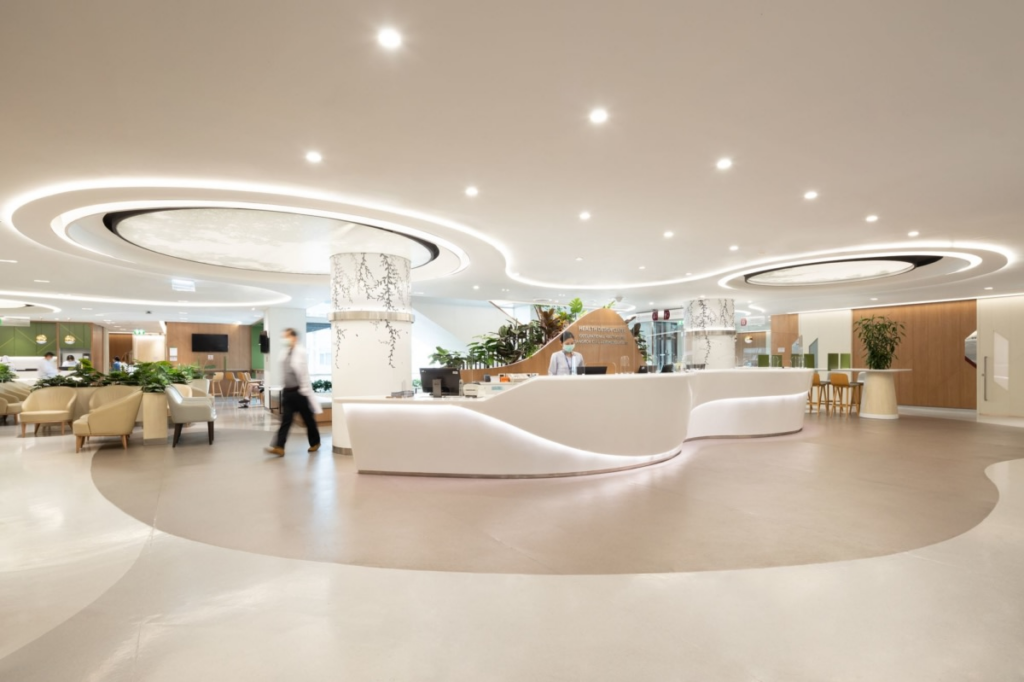
Medical tourism Bangkok attracts hundreds of thousands of international patients every year, and for good reason. The quality at accredited facilities is genuinely high, the cost savings compared to Western markets are real, and the range of procedures available rivals what you would find at major hospitals in London, Toronto, or Sydney. Thailand has earned its reputation as one of the world’s leading medical destinations.
But the guides that paint this picture tend to leave things out. Not the big things: the prices, the hospital names, the before and after photos. The smaller things. The things you only find out once you are already here, already booked, already committed. This article covers those.
Medical tourism Bangkok works well when it is planned well
Before getting into what the guides miss, it is worth being clear about what they get right. Bangkok’s top-tier private hospitals are internationally accredited, many of them JCI certified, with specialist depth that compares favourably to major Western medical centres. Procedures that cost $40,000 USD in the United States are available here for a fraction of that. Wait times for specialist consultations are days, not months. The infrastructure for international patients is well developed at the leading facilities: English-speaking coordinators, international patient departments, direct billing with major insurers.
Medical tourism Bangkok is not a shortcut or a compromise. At the right facility, for the right procedure, with the right planning, it is simply better care at a better price. The problems arise not from the system itself but from the gaps in how most people approach it.
The coordinator is not your advocate
When you contact a Bangkok hospital’s international patient department, the person you speak to is a hospital employee. They are helpful, professional, and often genuinely good at their job. They are also working for the hospital, not for you.
This matters more than it sounds. When you ask whether the surgeon they recommend is the right one for your specific case, they will say yes. When you ask whether the procedure you have in mind is the right approach, they will confirm it. When you ask whether there is a better option at a different facility, they will not tell you. Their job is to convert your enquiry into a booking, and they are good at it.

This is not unique to Bangkok. It is how international patient departments work everywhere. The difference is that when you are navigating a foreign healthcare system, in a second language, from a different country, the gap between having someone who works for the hospital and having someone who works for you is considerably larger.
An independent medical concierge in Bangkok works for you, not the hospital. That changes what advice you get, what questions get asked on your behalf, and what options you are shown. For anything beyond a straightforward elective procedure, the distinction matters.
The quoted price is rarely the final price
The price comparison between Bangkok and your home country is one of the most compelling reasons to consider medical tourism Bangkok in the first place. The comparison is real. But the number you see quoted on a hospital website or in an initial enquiry response is almost never the number you will actually pay.
What is typically included in a quoted price: the surgeon’s fee, the anaesthesia fee, the operating theatre time, and a standard hospital room for an estimated length of stay.
What is typically not included: pre-operative consultations and tests, any additional imaging required before or during the procedure, complications management if something does not go as planned, extended stay beyond the standard estimate, medications prescribed on discharge, and post-operative follow-up consultations.
At Bangkok’s premium private hospitals, each of these line items carries a meaningful cost. A procedure quoted at 200,000 THB can arrive as a 280,000 THB bill without anything going wrong. Confirm in writing exactly what is and is not covered before you commit to anything.
Your home insurance probably does not cover this
Most international patients coming to Bangkok for planned procedures assume their home country insurance will cover the cost, or at least a portion of it. Most of the time, it will not.
Standard health insurance policies in Canada, Australia, the UK, and the US typically exclude planned procedures performed outside the country of coverage. Travel insurance covers emergency medical events, not elective surgery you planned before you left. The exceptions exist. Some international health insurance plans do cover overseas procedures, and some insurers will pre-authorise specific treatments abroad. But they require you to confirm this with your insurer before you book, not after you return.
The payment reality for most medical tourists in Bangkok is straightforward: you are paying out of pocket. That changes the financial calculation, and it changes what you need to plan for. Understand your insurance position before your flights are booked.
Recovery requires time you may not have planned for
Most medical tourism Bangkok itineraries are built around the procedure itself. Fly in, have the surgery, recover for a few days, fly home. The problem is that surgical recovery does not run on a travel schedule.
Flying too soon after certain procedures carries real medical risk. This is particularly true of abdominal surgery, joint replacement, or any operation involving significant anaesthesia. Deep vein thrombosis is a documented concern for long-haul flights post-surgery. Wound integrity, swelling, and pain management all change in transit in ways that are difficult to predict. Your surgeon in Bangkok will give you a recommended minimum wait time before flying. Take it seriously, and build more buffer than you think you need.
Recovery also means follow-up. What happens if something does not look right two weeks after you are home? Who do you call? Is your local GP equipped to manage a post-operative complication from a procedure they did not perform? These are not hypothetical questions. Plan for them before you travel, not when the complication arises.
Surgeon credentials need verifying independently
Bangkok has exceptional surgeons. It also has clinics that market aggressively to international patients and do not maintain the same standards. The gap between the two is not always obvious from a website or a price quote.
When evaluating a surgeon for medical tourism Bangkok, the minimum standard is board certification in their specialty from the Medical Council of Thailand. For procedures in specialties with international boards, such as cardiac surgery, orthopaedics, and oncology, fellowship training or membership in a relevant international professional body is worth confirming. Hospital affiliation with a JCI-accredited facility is a meaningful signal, though it does not guarantee individual surgeon quality.
The review economy around medical tourism Bangkok is heavily managed. Clinic websites carry curated testimonials. Third-party booking platforms have commercial relationships with the facilities they recommend. Before and after photos are selected by the provider. None of this makes independent research impossible, but it makes it necessary. Verify credentials through official bodies, not through the provider’s own materials.
The cheapest option is not the benchmark
One of the most common mistakes in medical tourism Bangkok is using price as the primary filter. Bangkok’s cost advantage over Western markets is large enough that even the most expensive private hospitals here represent significant savings for most international patients. The temptation to go further down the price scale to maximize the saving is understandable and usually wrong.
The facilities that charge 30 to 40 percent less than Bangkok’s accredited private hospitals are cheaper for reasons that are worth understanding before you commit to them. Lower surgical volume in specific procedures. Less experienced nursing staff. Less robust post-operative monitoring. Older equipment. The cost savings on a 50,000 THB procedure look very different against the cost of managing a complication.
For a straightforward dental procedure or a cosmetic treatment with low complexity and low stakes, the calculation may be different. For anything involving general anaesthesia, internal organs, or a recovery period measured in weeks, use the saving versus your home country as your benchmark, not the saving versus Bangkok’s best facilities.
What good planning for medical tourism Bangkok actually looks like
The patients who have genuinely good experiences with medical tourism Bangkok tend to have a few things in common.
They confirm their insurance position before booking anything. They understand the full cost including likely add-ons, not just the quoted price. They verify surgeon credentials through official sources. They build a realistic recovery timeline that includes buffer for complications and does not have them on a long-haul flight four days post-surgery. They have a plan for follow-up care at home before they travel, not when they need it.
And increasingly, they have someone working for them on the ground in Bangkok. Not the hospital’s international coordinator, but an independent adviser who knows the system, knows the surgeons, and can ask the questions that a patient navigating a foreign healthcare system from the other side of the world is not positioned to ask effectively.
That is what Zenify BKK’s Full Independent Advisory is built around. For patients considering medical tourism Bangkok for anything beyond a minor procedure, it is the difference between hoping the planning was right and knowing it was.
For a real picture of what procedures cost at Bangkok’s different hospital tiers, see my guide to healthcare costs for Bangkok expats. For a closer look at how Bangkok’s private hospital system is structured, see my guide to navigating Bangkok’s hospitals as an expat.
Frequently asked questions
Is medical tourism in Bangkok safe? At Bangkok’s internationally accredited private hospitals, yes. Thailand has a strong track record in medical tourism and several of its leading hospitals rank among the best in Asia. The risks increase significantly when patients choose facilities primarily on price, skip independent credential verification, or do not plan adequately for recovery and follow-up care.
How much can I save with medical tourism in Bangkok? Savings of 50 to 70 percent compared to equivalent procedures in the US, Canada, Australia, or the UK are realistic at Bangkok’s accredited private hospitals, even before accounting for travel costs. The gap is largest for complex surgical procedures, cosmetic surgery, and dental work. See my healthcare costs guide for specific procedure comparisons.
Will my insurance cover medical treatment in Bangkok? Probably not for planned procedures. Most standard health insurance policies from Western countries exclude elective procedures performed abroad. Travel insurance covers emergency events, not planned surgery. Confirm your position with your insurer before booking.
How long do I need to stay in Bangkok after surgery? It depends on the procedure. Minor outpatient treatments may require no recovery stay at all. Major surgery, including joint replacement, cardiac procedures, and abdominal surgery, typically requires a minimum of one to two weeks before it is safe to fly, and often longer. Your surgeon’s guidance should be treated as a minimum, not a target.
Do I need a medical concierge for medical tourism in Bangkok? For simple, low-risk procedures at established facilities, an independent adviser is a convenience. For complex surgery, multi-stage treatment, or any situation where you are navigating Bangkok’s hospital system without existing knowledge of it, having someone who works for you rather than for the hospital is worth considerably more than it costs.
Zenify BKK is a premium health advisory and medical concierge service based in Bangkok, supporting expats, international patients, and health-conscious individuals navigating Thailand’s healthcare market.
